
Safety in infrastructure planning: consistency, competence and control
Safety in infrastructure delivery is often associated with systems, procedures and compliance. While these elements are essential, they are only part of the picture. In live environments such as highways, airfields and complex civil engineering projects, safety is shaped continuously by decisions and behaviours at every stage of delivery.
Rather than being determined at a single point in time, safety must be actively managed and reviewed as work progresses. Changing site conditions, evolving programmes and operational pressures mean that safety requires constant attention.
Safety risks on infrastructure projects
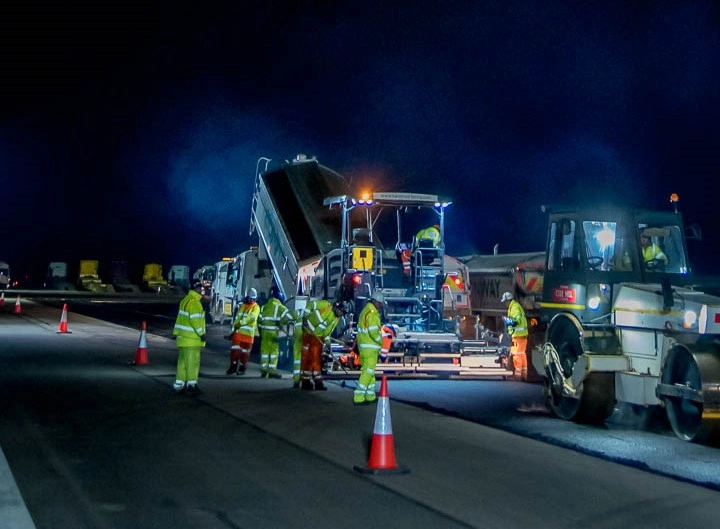
Infrastructure projects are rarely static. Live traffic, operational assets and public interfaces create environments where risk is dynamic. In these conditions, safety cannot rely solely on documentation. While risk assessments and method statements provide structure, the real impact comes when competent teams communicate clearly and supervise safety effectively on site.
Changes such as weather conditions and programme adjustments all require flexibility. The challenge is managing this change without increasing risk. To do this, teams have to recognise altered conditions, reassess risk promptly and maintain appropriate controls.
Programme pressure is also commonly cited as a safety risk. Tight windows and operational constraints can create tension between progress and control. However, safety and productivity are not opposing forces. Well planned and fully supervised works are often more efficient because they reduce uncertainty, rework and disruption.
Steps to mitigate safety risks
There are few steps infrastructure development teams take to mitigate the safety risks to individuals on-site.
Thorough planning
Planning remains a critical foundation for safe delivery, but it should be viewed as the starting point rather than the solution. Early planning helps identify interfaces, access constraints and sequencing risks. However, plans must remain live documents, reviewed as conditions change and new risks emerge.
Individual competencies
Competence is a constant influence on safety outcomes. Experienced engineers, supervisors and operatives bring situational awareness that cannot be captured fully on paper. They understand how live environments behave and when intervention is required.
This competence supports confidence. Teams who understand the work and the environment are better able to challenge unsafe conditions, pause activities when necessary and communicate clearly under pressure. Investment in training, supervision and leadership therefore plays a central role in maintaining safety.
Close, constant vigilance
Active supervision is one of the most effective tools for managing safety on live sites. Supervisors reinforce safe behaviours, manage change and maintain coordination between teams. Clear briefings and consistent communication help everyone understand not only what is planned, but why.
Continuous review and learning are also essential. Safety improves when teams reflect on near misses, share learning and reinforce good practice. Learning should not be limited to incidents. Understanding what works well supports consistency across projects and teams.
Managing safety responsibly
Effective safety in infrastructure delivery is characterised by clear planning supported by ongoing review, competent and supported teams, active supervision and controlled change management. It is not about eliminating risk entirely, but understanding and managing it responsibly.
For clients and the industry, safety should be assessed not just through systems and certifications, but also through how work is planned, delivered and adapted on site. Safety is not a stage in the programme or a section in a document. It is a continuous responsibility shared by everyone involved in delivery.