
Project overview
The M4 Junction 13–12 resurfacing scheme was a major carriageway renewal project delivered for National Highways across two closely integrated phases. The works focused on improving surface performance, extending asset life and reducing disruption on a key strategic route.
The first phase was delivered significantly ahead of programme, demonstrating how early collaboration, innovation and disciplined delivery can achieve high quality outcomes within challenging highway environments.
The challenge
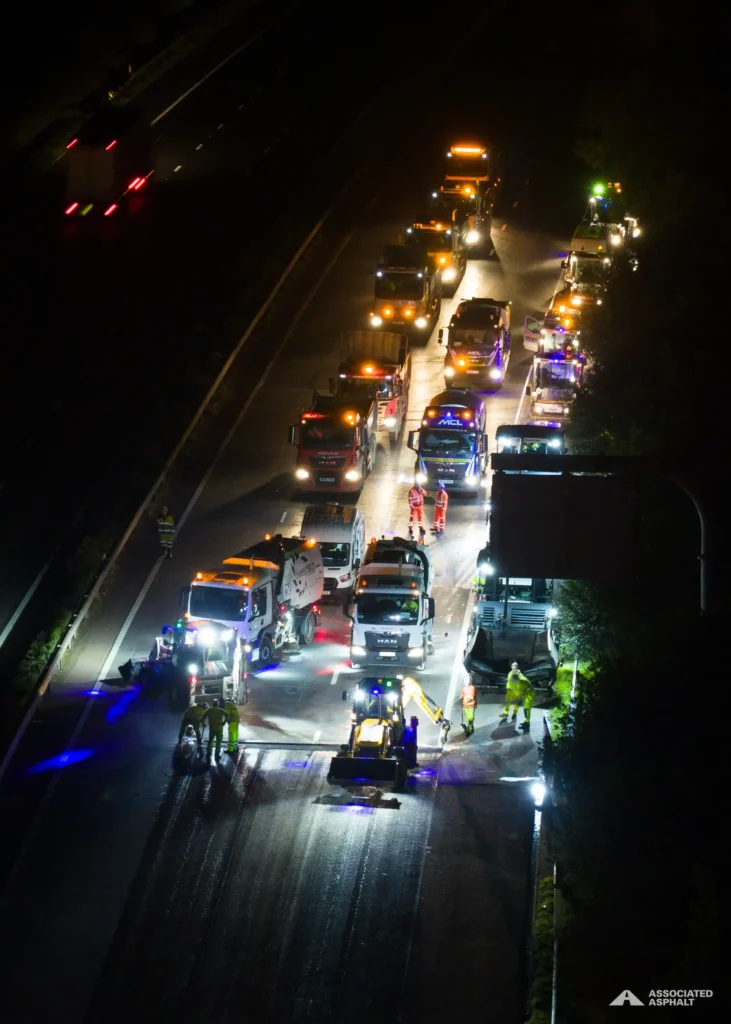
The scheme required large scale resurfacing under constrained working windows, with frequent changes to access caused by weather events, traffic incidents and shared road space. The works also involved complex logistics, with high volumes of vehicles, plant and personnel operating safely within a live highway environment.
Maintaining programme certainty, safety and quality while minimising disruption to road users was critical throughout.
Our approach
Associated Asphalt worked closely with National Highways from mobilisation to agree an optimised delivery strategy. Through collaborative planning and early technical engagement, the team identified opportunities to reduce programme duration while improving surface quality and long term performance.
A flexible programme was developed with built in float, allowing the team to respond to short notice changes without compromising safety or productivity. Strong site leadership and clear coordination enabled high activity operations to be managed safely and efficiently throughout the project.
Scope of works
Phase 1 (June – July 2025):
- Resurfacing approximately 7,800 linear metres across lanes 1, 2 and 3
- Works included sections of hard shoulder and pavement
- Total resurfacing area of 84,268 square metres
- Approximately 10,000 tonnes of asphalt laid
- Typical surfacing depth of 45mm with multiple 100mm loop hatch reinstatements
Through the agreed delivery approach, the Phase 1 programme was reduced from an original forecast of 90 shifts to just 29.
Phase 2 (late 2025):
- Approximately 4.3km of carriageway resurfacing
- Deeper reconstruction incorporating geogrid reinforcement
- Approximately 50,300 square metres of surfacing at 100mm depth
- Around 11,428 tonnes of material
- Removal and off site treatment of tar bound material
Value engineering and innovation
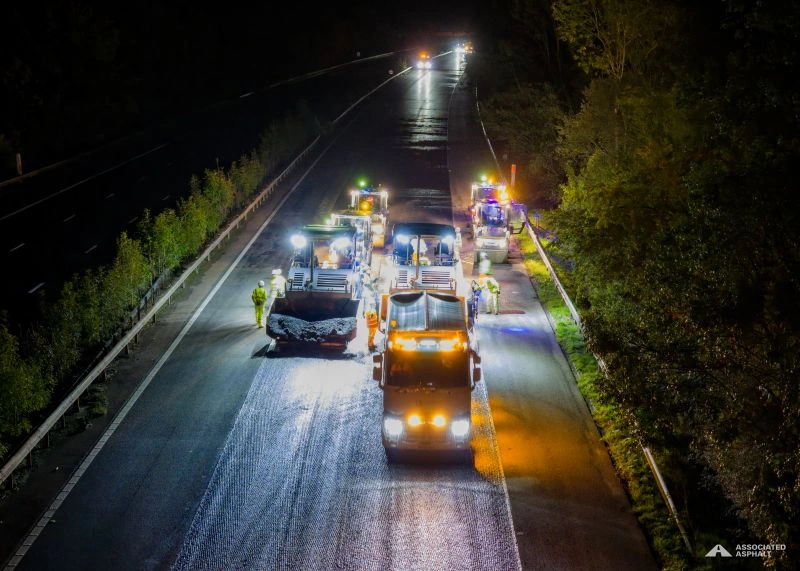
Echelon paving was introduced during Phase 1, with multiple pavers operating in tandem to lay lanes simultaneously. This approach reduced the programme by approximately two thirds, eliminated longitudinal joints and improved long term durability of the carriageway.
Material selection was optimised in collaboration with National Highways, including the use of higher Polished Stone Value aggregates sourced from local quarries. This exceeded specification requirements and delivered improved surface performance and finish.
GPS marking technology was also used to improve accuracy and efficiency during delivery. The project was filmed by WSP as a training resource to support future best practice across the network.
Safety, quality and social value
Despite peak activity levels of up to 25 vehicles and more than 30 personnel on site, the scheme achieved an exemplary safety record with zero accidents.
As part of the project’s social value commitment, Associated Asphalt worked with the Lighthouse Charity to support workforce mental health. The Lighthouse wellbeing bus was deployed at the Newbury Showground compound, providing confidential access to mental health support for site teams over a three day period.
The outcome
This scheme was delivered two shifts ahead of the revised programme and significantly faster than National Highways’ original expectations. The project received strong positive feedback for safety, planning, collaboration and delivery performance.
The scheme demonstrates Associated Asphalt’s ability to deliver complex, high volume highway resurfacing works safely, efficiently and at pace, while achieving measurable benefits for clients, road users and the wider network.